Posted on

How to Select an Embedded Computer for Industrial Automation

Industrial automation systems rely heavily on computing platforms that can operate continuously while maintaining high reliability. Embedded industrial computers are increasingly being used as the core controller in automation systems due to their durability and integration flexibility.
In many modern industrial installations, computers are no longer limited to office environments or control rooms. They are increasingly integrated directly into machinery, production lines and electrical cabinets, where they act as the central point for data processing, machine control and communication between different systems.

Automation environments are demanding by nature. Systems often operate around the clock and must interact with multiple devices simultaneously. PLCs, sensors, HMIs and various control systems may all depend on a reliable computing platform capable of maintaining stable performance over long periods of time. For engineers and plant managers responsible for keeping production running smoothly, the choice of computing hardware becomes an important operational decision. A system failure is not simply an IT issue, it can stop an entire production line.

Traditional desktop computers were never designed with these conditions in mind. Industrial environments frequently involve dust, vibration, limited installation space and continuous operation, all of which can affect the stability of standard consumer hardware. Embedded industrial computers address these challenges through their design. Their compact form factor allows them to be installed inside control cabinets or directly within machinery. Many models are fanless, reducing the risk of mechanical failure and helping protect internal components from dust and debris.

Another important factor is reliability. Industrial deployments often require systems to remain operational for many years. Embedded platforms are typically built using industrial-grade components and are designed to support long-term availability, which is essential for companies managing large fleets of machines or complex automation infrastructure. Industrial automation systems rarely operate in isolation. A single installation may involve communication with multiple controllers, sensors and monitoring systems. Because of this, connectivity plays a critical role when selecting an embedded computer. Ethernet connectivity is essential for modern industrial networks, while serial interfaces are still widely used for legacy equipment. USB connectivity is often required for peripheral devices, diagnostics tools or system updates. An embedded platform that offers a flexible range of interfaces allows system integrators to adapt the computer to different installations without requiring additional hardware.

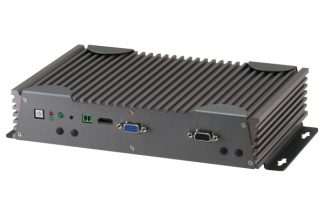
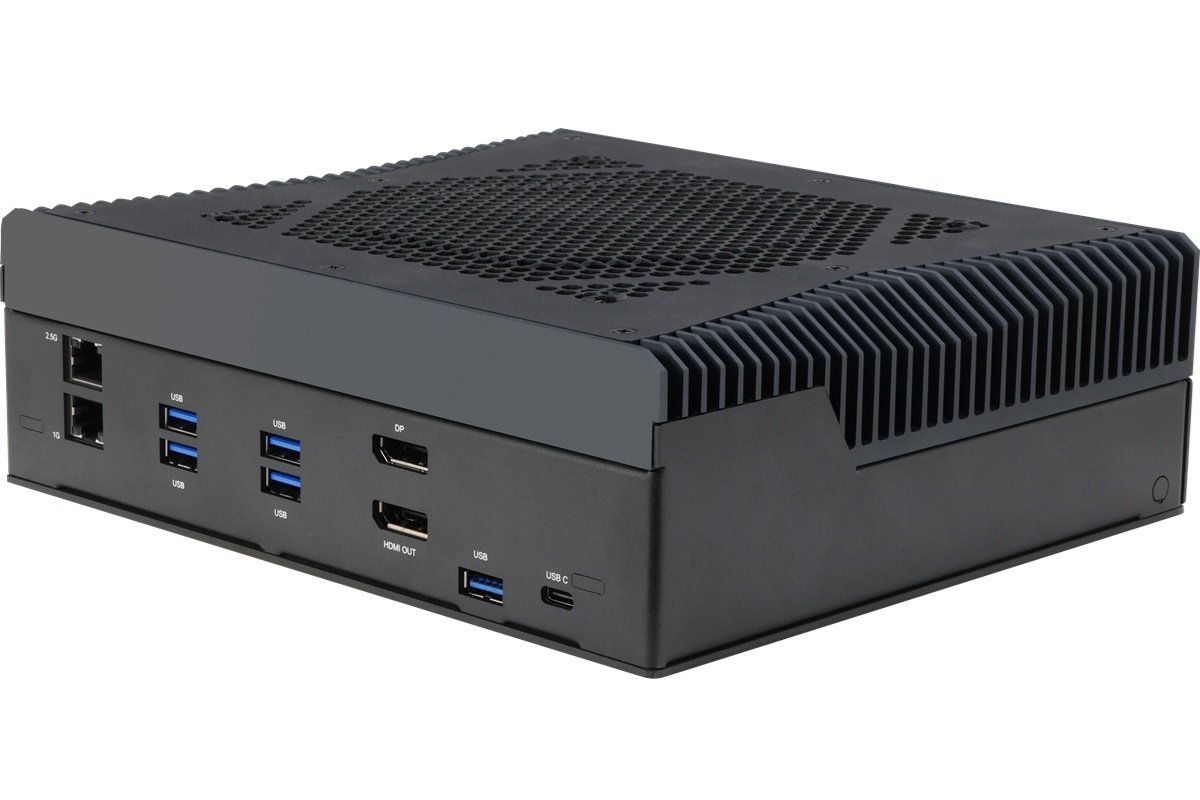
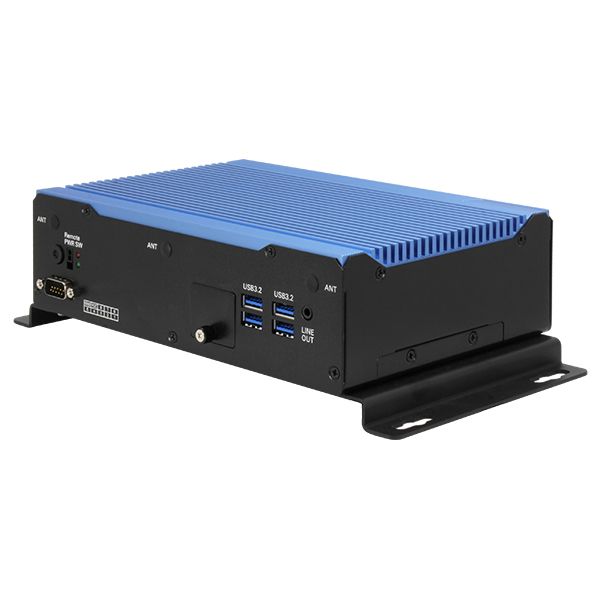
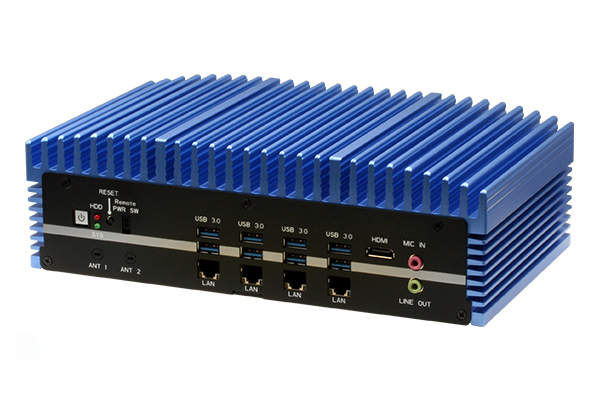
Industrial systems such as the BOXER-6641 illustrate the type of computing platform commonly used in automation environments.

Designed for embedded deployment, systems like this combine a compact design with rugged construction, making them suitable for installation inside control cabinets or directly within industrial equipment. Their connectivity options allow them to integrate with existing automation infrastructure while maintaining stable operation under demanding conditions.

For many system integrators and machine builders, platforms of this type provide a practical balance between performance, reliability and long-term deployment stability.

Typical Industrial Applications

The BOXER-6641 is well suited for applications such as:

  • Industrial automation and control systems

  • Control cabinets and panel PCs

  • Industrial gateways and edge computing

  • Machine monitoring and data acquisition

Availability & Configuration

Selecting the right embedded computer is an important step in building reliable industrial automation systems. In environments where machines operate continuously and multiple systems must communicate seamlessly, the computing platform becomes a critical component of the overall infrastructure.

Embedded industrial computers provide the durability, connectivity and long-term reliability required to support modern automation environments. For organisations looking to reduce downtime and maintain stable production processes, choosing hardware designed specifically for industrial use can make a significant difference.

The BOXER-6641 is available in multiple configurations to suit different performance and I/O requirements. 👉 Contact ETE to discuss availability, configuration options and suitability for your project.
Please enable JavaScript in your browser to complete this form.
Posted on

Why Fanless Industrial Computers Are Replacing Traditional PCs | ETE

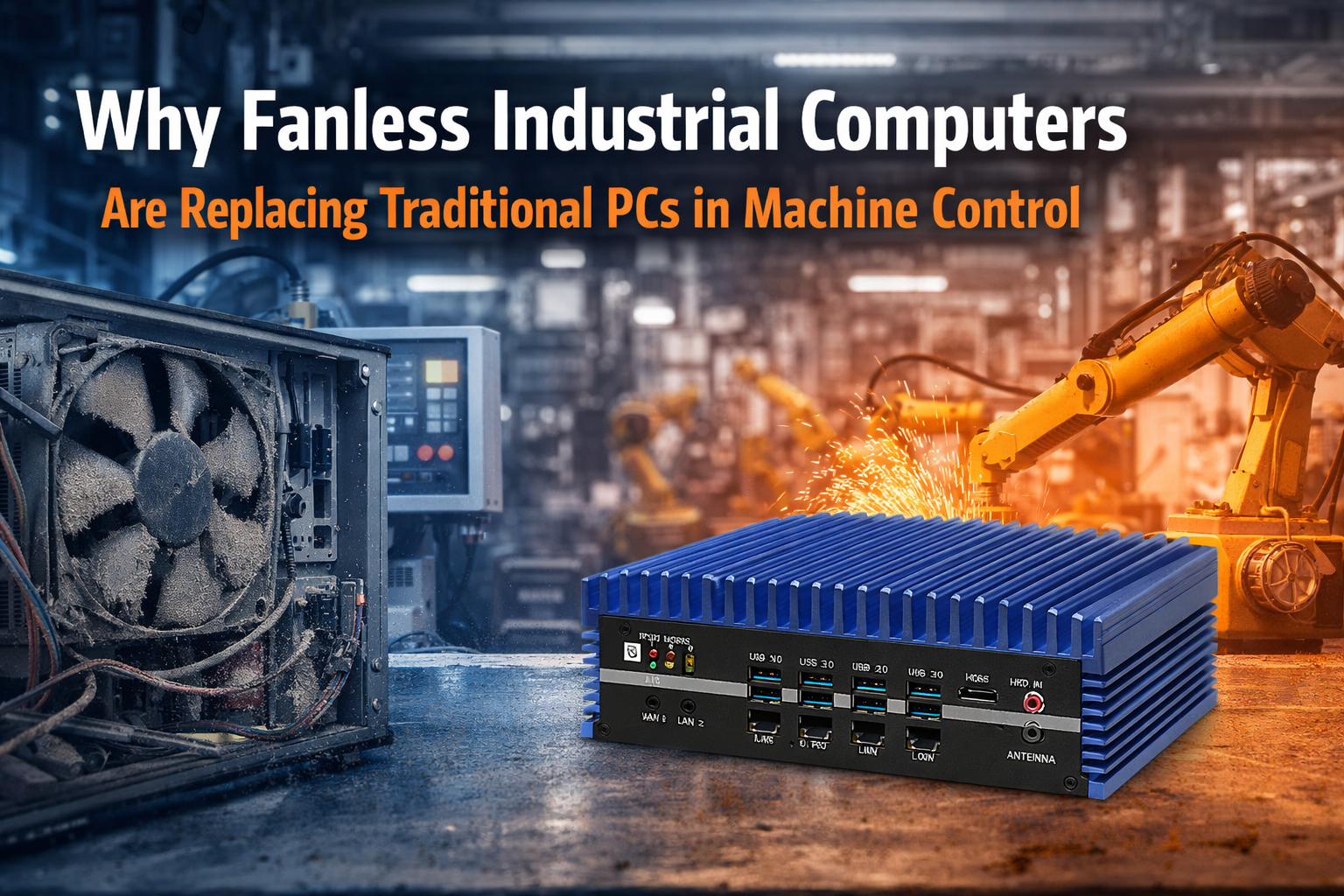
Industrial environments place significant demands on computing hardware. Dust, vibration, temperature fluctuations and continuous operation make traditional office computers unsuitable for most machine control applications.

For this reason, many system integrators and machine builders are moving towards fanless embedded industrial computers designed specifically for harsh environments.

The problem with traditional PCs on the factory floor

In many facilities, the computer responsible for controlling or monitoring machinery is often installed inside an electrical cabinet or mounted directly on the production line. While a standard desktop PC may seem like a convenient solution, these systems are rarely designed for the conditions found in industrial environments.

One of the most common points of failure is the cooling system. Traditional computers rely on internal fans to regulate temperature. In environments where dust, fibres or metal particles are present, these fans can quickly become clogged, reducing cooling efficiency and eventually causing overheating. Vibration is another factor that is frequently underestimated. Machinery, motors and production equipment create constant vibration, which can affect internal components over time. Combined with continuous operation, this can significantly shorten the lifespan of standard consumer hardware.

For companies relying on stable machine control systems, unexpected downtime caused by computer failures can quickly translate into production losses and costly maintenance interventions.

Why fanless industrial computers make sense

Fanless embedded computers were designed specifically to address these challenges. By eliminating internal fans and using passive cooling systems, these platforms remove one of the most common sources of hardware failure.

Instead of relying on airflow through the chassis, fanless systems typically use aluminium enclosures that act as heat sinks, dissipating heat safely while keeping the internal components sealed from dust and debris.

This design not only improves reliability but also reduces maintenance requirements. In many industrial installations, equipment is expected to operate continuously for years. A sealed, fanless system helps ensure that the computing platform remains stable without the need for frequent servicing.

Another important advantage is the compact form factor. Embedded computers are typically much smaller than traditional desktop systems, allowing them to be installed easily inside control cabinets or integrated directly into machinery.

Integration with industrial equipment

Machine control systems often need to communicate with a wide range of devices. PLCs, sensors, HMIs and legacy equipment may all require different communication interfaces.

Embedded industrial computers are therefore designed with integration in mind. Multiple Ethernet ports, serial interfaces and USB connectivity allow engineers to connect the computer directly to existing industrial infrastructure without additional hardware.

This flexibility makes embedded systems particularly attractive for machine builders and system integrators who need reliable computing platforms that can adapt to different project requirements.

An example of an industrial embedded platform

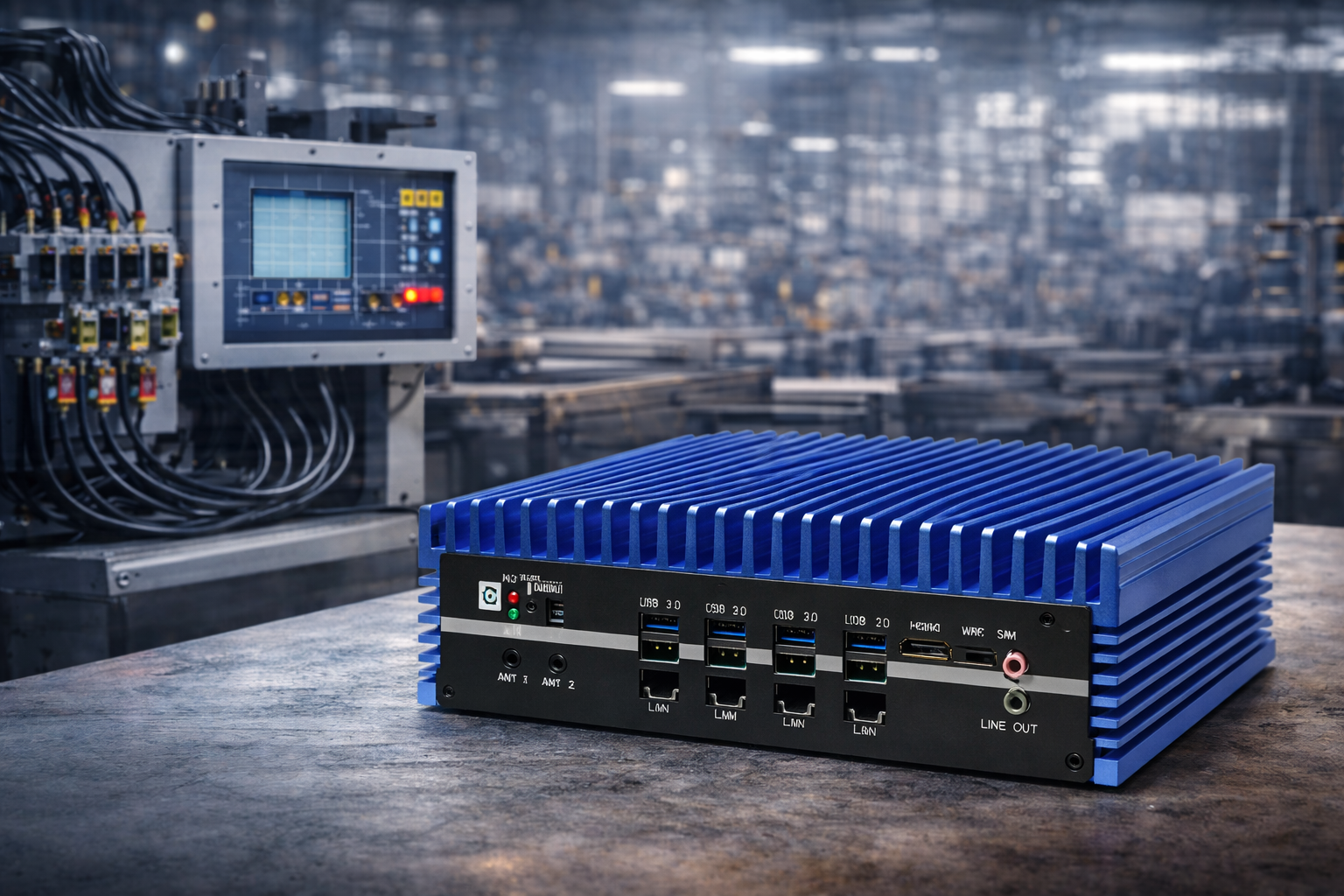
Industrial computers such as the AAEON BOXER-6641 illustrate how modern embedded systems are designed for these environments. Built with a rugged fanless architecture, platforms like this are intended to operate reliably in demanding industrial conditions while providing the connectivity required for machine integration. Their compact design allows installation inside control cabinets, while industrial-grade components help ensure stable operation over extended periods of continuous use.

For machine builders and automation integrators, systems like the BOXER-6641 provide a balance between performance, durability and long-term availability.

Typical Industrial Applications

The BOXER-6641 is well suited for applications such as:

  • Industrial automation and control systems

  • Control cabinets and panel PCs

  • Industrial gateways and edge computing

  • Machine monitoring and data acquisition

As automation systems continue to become more sophisticated, the reliability of the underlying computing hardware becomes increasingly important. In environments where dust, vibration and continuous operation are part of daily operations, traditional PCs often struggle to deliver the stability required.

Fanless embedded industrial computers provide a practical and durable alternative, helping manufacturers reduce downtime, simplify maintenance and ensure that machine control systems remain reliable over the long term.

👉 Contact ETE to discuss availability, configuration options and suitability for your project.

Please enable JavaScript in your browser to complete this form.
Posted on

ETE Launches the BOXER-8653AI-PLUS – High-Performance Multi-Camera Edge AI System with NVIDIA Jetson Orin NX

BOXER-8653AI-PLUS Jetson Orin NX Edge AI System Now Available in Australia

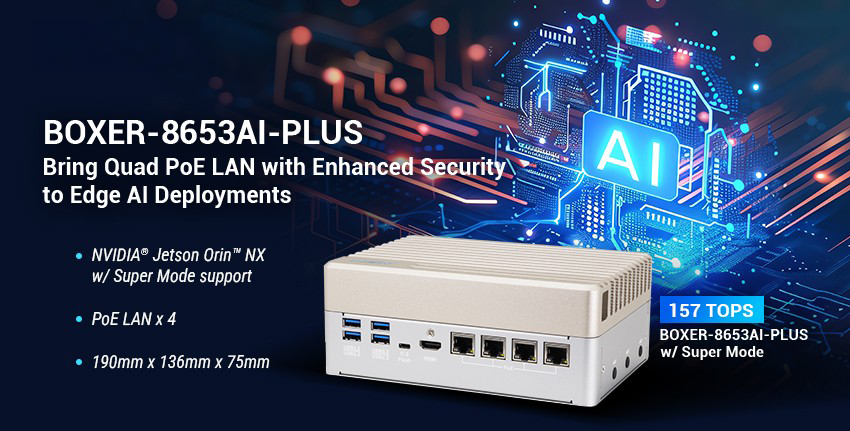
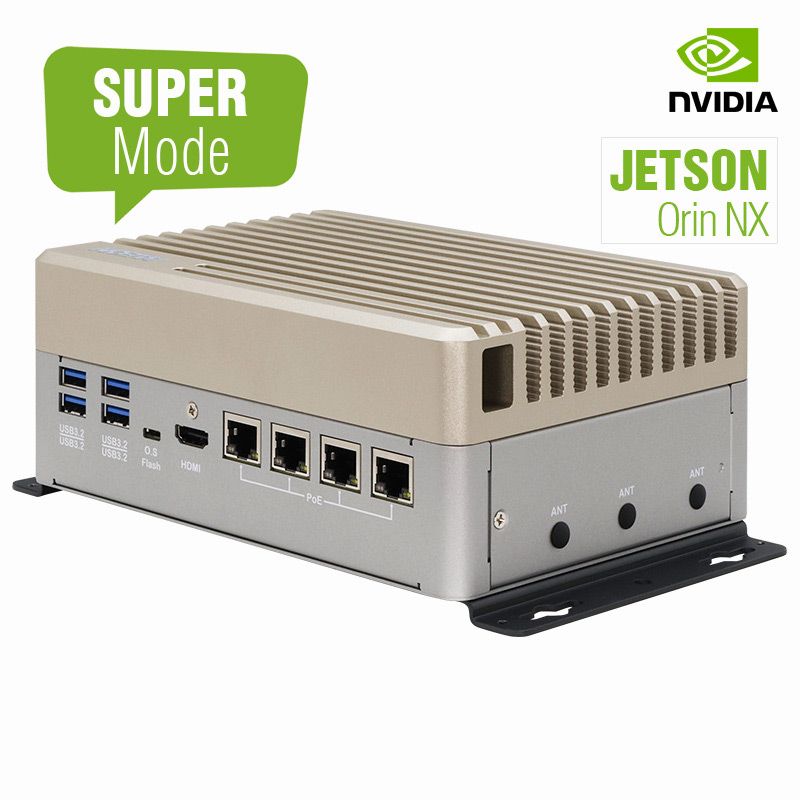
Embedded Technologies (ETE) is proud to announce the Australian availability of the BOXER-8653AI-PLUS, an advanced fanless edge AI platform from AAEON, powered by the NVIDIA® Jetson Orin™ NX.

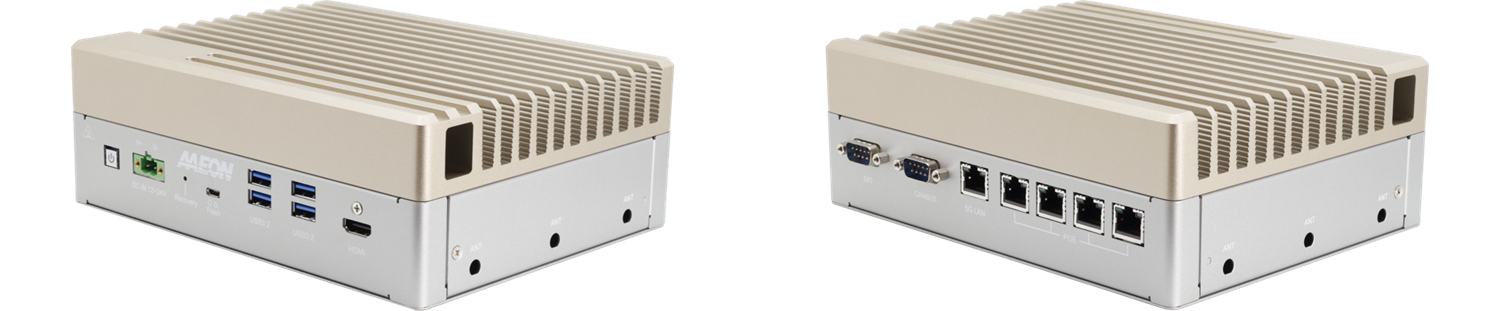
Designed for multi-camera AI inferencing, industrial automation, and Smart City deployments, the BOXER-8653AI-PLUS combines high-performance AI processing, four independent PoE ports, secure remote management, and rugged environmental resilience all within a compact single-box architecture.

Multi-Camera AI at the Edge – Simplified

One of the system’s standout features is its four independent GbE PoE/PSE (802.3af/at) ports, delivering up to 60W total output with per-port power management.

This enables:

  • Multi-camera AI inferencing from a single device

  • Simplified installation for roadside units and inspection systems

  • Remote, independent power control for each connected camera

For integrators deploying AI-driven ANPR, traffic monitoring, public safety, or industrial inspection, this reduces system complexity while increasing reliability.

NVIDIA Jetson Orin NX with Super Mode – Up to 157 TOPS

At the core of the BOXER-8653AI-PLUS is the NVIDIA Jetson Orin NX module, supporting JetPack 6.2.1 and Super Mode.

Key capabilities include:

  • Up to 157 TOPS AI performance
  • 6-core Arm® Cortex®-A78AE 64-bit CPU
  • 8GB LPDDR5 memory
  • 128GB NVMe storage (preinstalled)

This performance level allows complex AI models to run across multiple simultaneous video streams — reducing latency and enabling real-time decision-making at the edge.

Ideal for:

  • Smart City infrastructure
  • Intelligent transport systems
  • Factory automation
  • Edge-based AI analytics

Secure Remote Deployment with TPM 2.0 & OOB Management

Edge systems often operate in unmanned or remote environments. Security and recoverability are critical.

The BOXER-8653AI-PLUS includes:

  • Onboard TPM 2.0 for hardware-level security
  • Out-of-band (OOB) management header
  • Remote monitoring, diagnosis and recovery
  • Optional MAZU AI model protection framework

This ensures application-critical data and deployed AI models remain protected — even in distributed deployments.

Built for Harsh Environments

Engineered for stability in demanding conditions, the system features:

  • Operating temperature: -25°C to 65°C
  • Wide 12V–24V DC input range
  • 3.5 Grms vibration resistance
  • 50G shock resistance
  • Compact footprint: 190mm x 136mm x 75mm

Its fanless design reduces mechanical failure points, making it ideal for roadside cabinets, factory floors, and transport infrastructure.

Availability & Configuration

The BOXER-8653AI-PLUS is now available through Embedded Technologies (ETE), supporting projects across Melbourne and nationwide. For pricing, integration advice, or project consultation, contact our team today.

Please enable JavaScript in your browser to complete this form.
Posted on

BOXER-6641: Fanless Industrial Box PC Supporting 8th & 9th Gen Intel® CPUs and Windows 11

The BOXER-6641 is a high-performance fanless embedded box PC designed for demanding industrial environments where reliability, flexibility and long-term availability are critical.

Supporting 8th and 9th Generation Intel® Core™ and Xeon® processors, and fully compatible with Windows® 10 and Windows® 11, the BOXER-6641 provides a future-ready platform for a wide range of industrial applications.

Built for Industrial Reliability

Designed with a rugged, all-metal, fanless chassis, the BOXER-6641 is well suited to harsh environments where dust, vibration and temperature fluctuations are common. The system supports a wide DC input range from 10V to 35V and operates reliably within temperatures from -20°C to 55°C (-20°C to 45°C with higher-TDP processors), ensuring stable operation in industrial settings.

Maintenance is straightforward: the top heatsink can be removed with six screws for CPU access, while the bottom panel provides easy access to memory and storage, reducing downtime during upgrades or servicing.

Performance & Operating System Support

The BOXER-6641 supports a broad range of 8th and 9th Generation Intel® desktop-grade processors, including Core™ i3, i5, i7, i9 and Xeon® options. Combined with support for DDR4 ECC or non-ECC memory (up to 64GB), the platform delivers desktop-class performance in a compact industrial form factor.

Importantly for long-lifecycle projects, the BOXER-6641 supports both Windows® 10 and Windows® 11, allowing system integrators to align deployments with current and future OS requirements.

Connectivity & Expansion Flexibility

To support complex industrial systems, the BOXER-6641 offers extensive connectivity and expansion options, including:

  • 4 × Intel® Gigabit Ethernet ports

  • Up to 8 × USB 3.2 Gen 1 ports

  • 6 × RS-232/422/485 serial ports

  • Dual HDMI display outputs

  • Mini-PCIe and mSATA expansion slots, including SIM support

This flexibility enables integration with a wide range of peripherals, sensors and industrial equipment.

Typical Industrial Applications

The BOXER-6641 is well suited for applications such as:

  • Industrial automation and control systems

  • Control cabinets and panel PCs

  • Industrial gateways and edge computing

  • Machine monitoring and data acquisition

Availability & Configuration

The BOXER-6641 is available in multiple configurations to suit different performance and I/O requirements. 👉 Contact ETE to discuss availability, configuration options and suitability for your project.
Please enable JavaScript in your browser to complete this form.
Posted on

AAEON Announces Development of BOXER-8742AI Based on NVIDIA Jetson T4000

Following CES 2026, AAEON has announced its development plans for the BOXER-8742AI, an upcoming embedded AI box PC built on the newly introduced NVIDIA Jetson T4000 module. The system represents AAEON’s first platform designed around the Jetson T4000 and is targeted at high-performance edge AI deployments across multiple industries.

The BOXER-8742AI is being developed as a fanless embedded AI system, engineered to support production-ready AI workloads, real-time processing and multi-sensor applications. Powered by NVIDIA’s Blackwell architecture, the Jetson T4000 module delivers a significant leap in AI performance, offering up to four times higher AI compute alongside improved energy efficiency and real-time reasoning capabilities.

Despite its compact footprint — measuring approximately 210mm × 164.2mm × 74mm — the BOXER-8742AI is designed to support demanding edge AI use cases. These include applications such as smart factory automation, autonomous mobile robots (AMR) and AI-enabled roadside infrastructure, where low latency and high-throughput sensor processing are critical.

From an I/O and connectivity perspective, the BOXER-8742AI is expected to feature a robust set of interfaces suited to complex industrial environments. Planned connectivity includes four RJ-45 LAN ports with PoE support, an additional 5GbE RJ-45 port, and a selection of DB-9 and DB-15 interfaces supporting CANBus, DIO and RS-232/422/485 protocols. The system will also offer four USB 3.2 Gen 2 ports, enabling high-bandwidth data transfer from multiple synchronised vision sensors.

According to AAEON, the BOXER-8742AI is scheduled for availability in Q2 2026. At this stage, the platform is positioned as an announcement-stage product, with specifications and configurations subject to final validation as development progresses.

At ETE, we closely monitor new embedded and edge AI platforms announced by our technology partners in order to support early evaluation, solution planning and technical discussions. As further details on the BOXER-8742AI become available, we will continue to share updates and guidance relevant to local projects and deployments.

👉 For early technical discussions or to understand how upcoming Jetson T4000–based platforms may fit your application, contact the ETE team.

Please enable JavaScript in your browser to complete this form.
Posted on

From the Baloney Slicer to Fanless Industrial Computers

From the Baloney Slicer to Fanless Industrial Computers: 69 Years of Innovation

The groundbreaking advance in industrial computers!!!
Ok… let’s go back 69 years.

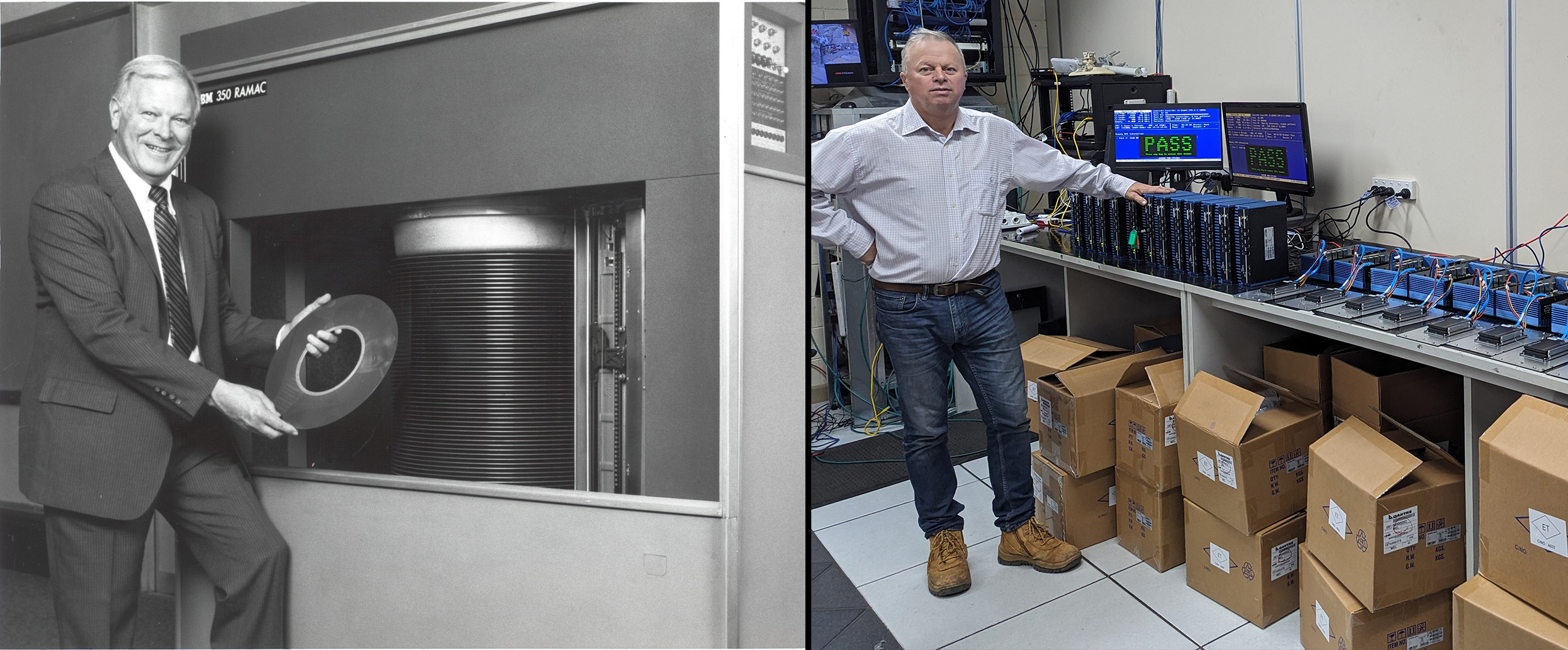
In September 1956, IBM introduced the RAMAC 350 disk storage unit, the world’s first hard disk drive. It weighed more than a ton, held 50 spinning platters, and stored what was then a truly remarkable 3.75MB of data. Nicknamed “the baloney slicer,” this machine wasn’t just about size or storage capacity, it represented a new way of thinking about information.


What once took up an entire room now fits in the palm of your hand. That contrast alone shows how far industrial computers have come since 1956. But it’s not just about size or performance, it’s about resilience and adaptability.

For the first time, businesses could move away from punch cards and access data directly, quickly, and efficiently. That was the beginning of industrial computers as we know it today. The journey from the RAMAC 350 to today’s fanless industrial computers is a story of constant refinement: faster, smaller, tougher, and more reliable. And while technology has transformed beyond recognition, the spirit of innovation remains the same.

The RAMAC 350 showed the world what was possible when bold ideas met engineering ambition. Today, industrial computers may look very different, but they carry the same DNA of innovation, reliability, and purpose.


Because just like in 1956, it’s not only about the technology itself, it’s about what that technology makes possible.

Embedded Technologies carries this legacy forward, bringing rugged, reliable industrial computers to Australian industries. Let’s talk!

Please enable JavaScript in your browser to complete this form.
Posted on

Intelli i14 Edge: A New Era for Industrial Computers in Australia

The future of industrial computers has just arrived, and it comes in a form factor you might not expect. The new Intelli i14 Edge from AAEON brings workstation-level performance into a compact, rugged, and fanless design  a breakthrough that changes what’s possible at the edge.

At Embedded Technologies, we’re proud to launch the Intelli i14 Edge to the Australian market. More than just another box PC, this is a next-generation industrial computer that combines 14th Gen Intel® Core™ CPUs with NVIDIA RTX™ GPUs in a design small enough for mobile and industrial deployments, yet tough enough to survive them.

Performance Without Compromise

What makes the Intelli i14 Edge different is simple: it delivers both CPU and GPU power in one compact, reliable unit. At its core sits the Intel® Core™ i9 14900T, a 24-core, 32-thread processor capable of managing everything from real-time navigation and robotics control to heavy data logging and analysis.

Alongside this CPU, the Intelli i14 Edge integrates NVIDIA RTX™ MXM GPUs — the A2000 or A4500. With up to 5,888 CUDA cores and 184 Tensor cores built on the NVIDIA Ampere architecture, this industrial computer provides the horsepower needed for demanding AI workloads such as LiDAR fusion, computer vision, and sensor data processing. Unlike bulky PCIe GPUs, the MXM module ensures long lifecycle support and rugged reliability, all while fitting into the Intelli i14’s remarkably small footprint.

Rugged Design for Real-World Demands

Performance means little without reliability. That’s why the Intelli i14 Edge is built with a fanless, dust-free cooling system and an enclosure tested against IEC EN60068-2-64 vibration standards. Whether installed in an autonomous vehicle, deployed in defence operations, or integrated into industrial robotics, this industrial computer is engineered to operate continuously in environments where traditional PCs simply can’t survive.

Compact, Connected, and Ready for AI

Despite its small 205 × 190 × 70 mm design, the Intelli i14 Edge is rich in connectivity. With five USB 3.2 ports, dual LAN ports, and dual NVMe storage slots, it integrates seamlessly with the sensors, cameras, LiDAR, and industrial I/O hubs required in today’s AI-driven applications. From healthcare diagnostics to fleet management and smart mobility, this industrial computer adapts effortlessly across industries.

Why It Stands Out

The Intelli i14 Edge sets itself apart by bringing together what was previously separated: high-performance CPUs and professional-grade GPUs, all in a compact, rugged, fanless system. It’s this unique combination that makes it a true differentiator in the world of industrial computers, giving Australian industries the power to prototype, deploy, and scale advanced AI solutions faster than ever.

At Embedded Technologies, we’re excited to make the Intelli i14 Edge available locally — continuing our mission to deliver rugged, reliable industrial computing solutions that help businesses push boundaries.

👉 Contact us to learn how the Intelli i14 Edge can power your next project.

Posted on

UP Edge AI Toolkit – Seamless integration from software to hardware for rapid AI development

UP Edge AI Toolkit - Seamless integration from software to hardware for rapid AI development

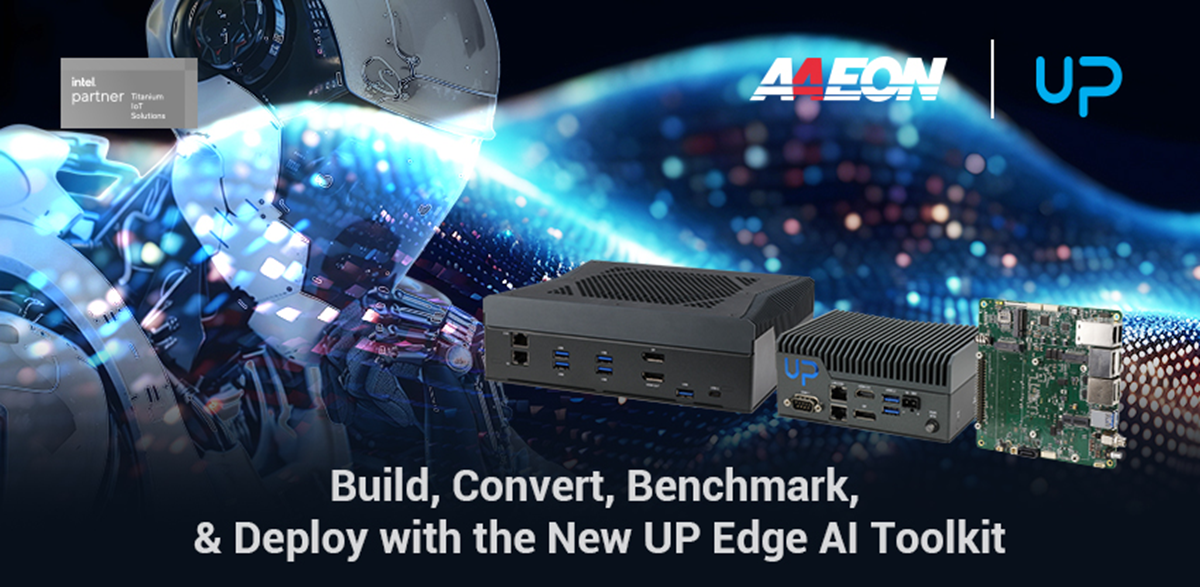
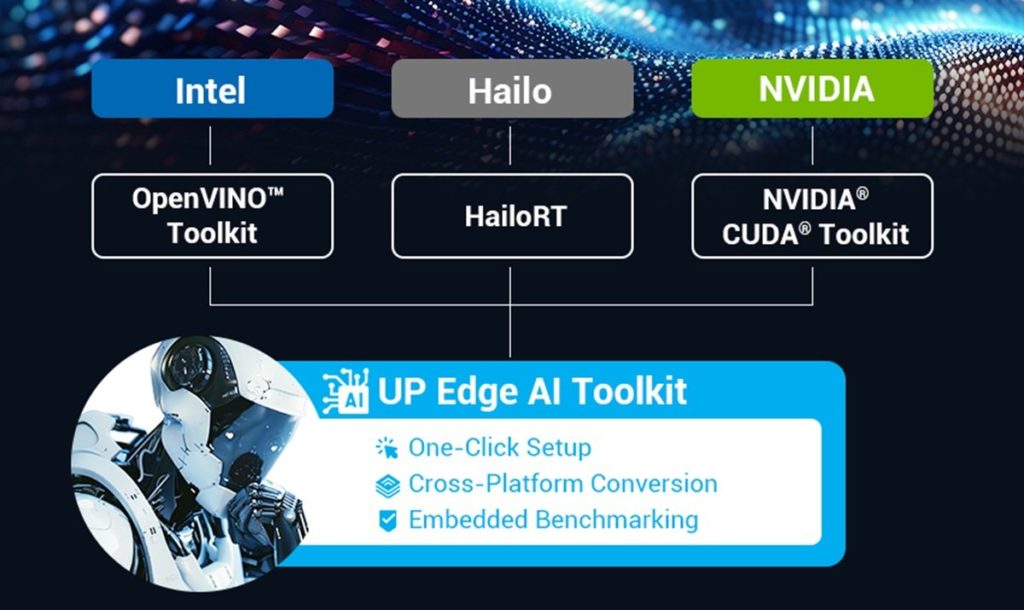
The new UP Edge AI Toolkit gives developers a complete framework to build, convert, and deploy AI models across the UP hardware ecosystem. By combining one-click runtime environment setup, cross-platform model conversion, embedded benchmarking tools, and out-of-the-box compatibility with UP devices such as the UP Xtreme ARL, UP Squared Pro 710H Edge, and the upcoming Intelli i14 Edge, this free toolkit makes AI project development and deployment faster, simpler, and more reliable.

UP edge ai

First Step: What You Can Do with the UP Edge AI Toolkit

One-Click Runtime Environment Setup
The toolkit brings together all required SDKs, drivers, and libraries for Intel, NVIDIA, and Hailo into a single package. With just one click, you can create a unified, platform-agnostic runtime environment ready for development.

Embedded Performance Benchmarking
Easily evaluate multiple AI models on the same hardware platform. Measure latency, throughput, power consumption, and thermal efficiency across Intel, NVIDIA, and Hailo solutions without needing to test each model separately on different systems.

Cross-Platform Model Conversion
Convert pre-trained models into formats optimised for UP hardware. With support for Intel® Distribution of OpenVINO™, HailoRT, and NVIDIA® CUDA® Toolkit, the UP Edge AI Toolkit ensures platform-specific optimisation for maximum performance.

Integrated Edge AI Sizing Tool
Experiment with workload parameters such as batch size, precision modes, and accelerator selection without manually reconfiguring pipelines. The Intel Edge AI Sizing Tool, included in the toolkit, provides zero-code configuration, real-time performance insights, and an isolated testing environment so you can determine scalability before investing project resources.

Next Step: Choose the Right Hardware for Your Project

With the UP Edge AI Toolkit, you can build, test, and iterate across Intel, NVIDIA, and Hailo platforms quickly and efficiently, removing common barriers to proof of concept development.

UP Squared Pro 710H Edge + Hailo
Run advanced AI models on the UP Squared Pro 710H Edge, a compact fanless Mini PC powered by Intel® Processor N-series. Its onboard Hailo-8™ edge AI accelerator ensures efficient, low-power performance for demanding inference tasks.

UP Xtreme ARL (Arrow Lake)
Powered by Intel® Core™ Ultra 200H Series processors, the UP Xtreme ARL delivers up to 97 TOPS of AI performance. It’s ideal for next-generation robotics and AMR solutions, allowing you to optimise your applications with the AI models that fit best, across platforms.

Intelli i14 Edge + NVIDIA
Combine the Intelli i14 Edge, built on 14th Gen Intel® Core™ processors, with NVIDIA® RTX™ A2000 or RTX™ A4500 GPUs to unlock elite performance for advanced models, enabling cutting-edge AI workloads on a rugged, compact platform.

Posted on

The Forgotten Workhorses: why ignoring legacy industrial computers is a costly mistake

In the world of industrial automation, some of the most critical systems are also the most overlooked. At Embedded Technologies, we’ve seen it time and time again: rugged, decades-old industrial computers quietly performing vital tasks. Bending pipes, sorting produce, or controlling conveyor belts without ever drawing attention to themselves.

Their unwavering performance breeds a false sense of security. But this invisibility is precisely what makes them dangerous.

Out of sight, out of mind – Until they fail.

Earlier this week, one of our clients had to fly an engineer across the world to Taiwan, just to deal with a failing legacy system that no one had thought about for years. The result? Days of halted production, emergency repairs, and a stress bill that no one had budgeted for.

It’s not an isolated incident.

When legacy systems fail, production often stops completely. The equipment they control may be bespoke, custom-integrated, or simply too old to run on anything else. Spare parts are unavailable, documentation is missing, and the original vendors may no longer exist.

Suddenly, the cost of doing nothing becomes astronomical.

Are you running on invisible risk?

Ask yourself:

  • Do you know which industrial computers are still running your most important machinery?

  • Do you know how old they are?

  • Do you know where you’d get a replacement if one failed tomorrow?

Chances are, no one does, until it’s too late. At Embedded Technologies, we regularly see systems running on DOS, 486 hardware, or proprietary 1990s boards that are still shouldering mission-critical tasks. These machines are dependable but they are also irreplaceable.

Our proposal: Audit. Source. Safeguard.

We’re offering a proactive solution through our Legacy Systems Audit & Contingency Planning service. Here’s how we help:

  • Audit: We identify and document all legacy systems in your facility. What they do, how critical they are, and how much risk they carry.

  • Source: We tap into our global supplier network to locate spare parts or equivalent drop-in replacements—before they’re needed.

  • Safeguard: We help you build a contingency plan, which may include pre-configured backups, drive imaging, or selective modernisation—so you’re prepared for the inevitable.

Don’t let a $200 board halt a million-dollar operation

Industrial computers don’t need to be flashy to be essential. But when they fail, the impact isn’t quiet—it’s costly, chaotic, and often avoidable.

Let Embedded Technologies help you secure the systems that quietly keep your operations alive. Book a Legacy Systems Audit today and discover how much risk might be hiding in plain sight.

Please enable JavaScript in your browser to complete this form.

Emerging Trends in Embedded Computing

As technology continues to evolve, so do embedded computers. Here are some emerging trends to watch:

  1. Edge Computing Revolution:
    • Definition: The paradigm shift toward processing data closer to its source, known as edge computing, is reshaping the way information is handled.
    • Significance: This trend demands robust embedded systems capable of real-time data analysis, reducing latency and enhancing responsiveness.
    • Application Highlight: Explore our cutting-edge IoT Gateway Solutions here.
  2. AI Integration for Intelligent Solutions:
    • Definition: The integration of artificial intelligence (AI) into embedded systems is becoming increasingly prevalent.
    • Impact: AI-enhanced embedded systems empower devices to analyze data, make intelligent decisions, and adapt autonomously to changing conditions.
    • Explore AI Computing Solutions: Dive into the future with our AI Computing Solutions here.
  3. Sustainability in Every Byte:
    • Definition: Green embedded solutions are gaining momentum in response to growing environmental concerns.
    • Focus: Energy-efficient hardware and optimized software are key players in reducing the carbon footprint of embedded systems.
    • Discover Sustainable Solutions: Embrace sustainability with our range of Industrial Single Board Computers and Computer-on-Modules here.

As we enter in a new era of possibilities, these trends are not merely glimpses into the future; they are the defining features of the next generation of embedded computing.

Posted on

How the BOXER-6647-MTH Is Powering the Next Generation of Smart Logistics

At Embedded Technologies, we’ve seen a growing demand for compact, AI-ready computing solutions that can thrive in industrial environments — and the new BOXER-6647-MTH from AAEON delivers exactly that.

Recently, our partner LogiPort, a leader in warehouse automation, adopted this rugged fanless PC to drive real-time AI tasks across its fleet of autonomous mobile robots (AMRs). The results? Greater uptime, lower latency, and simplified maintenance — all in one small, ultra-efficient unit.

Table of contents

  1. Key Features
  2. Emerging Trends in Embedded Computing
  3. Get in touch

Continue reading How the BOXER-6647-MTH Is Powering the Next Generation of Smart Logistics